Microservices Architecture: A Comprehensive Guide
Microservices architecture has become increasingly popular, but it's not always the right choice. This guide helps you understand when microservices make sense and how to implement them successfully.
What Are Microservices?
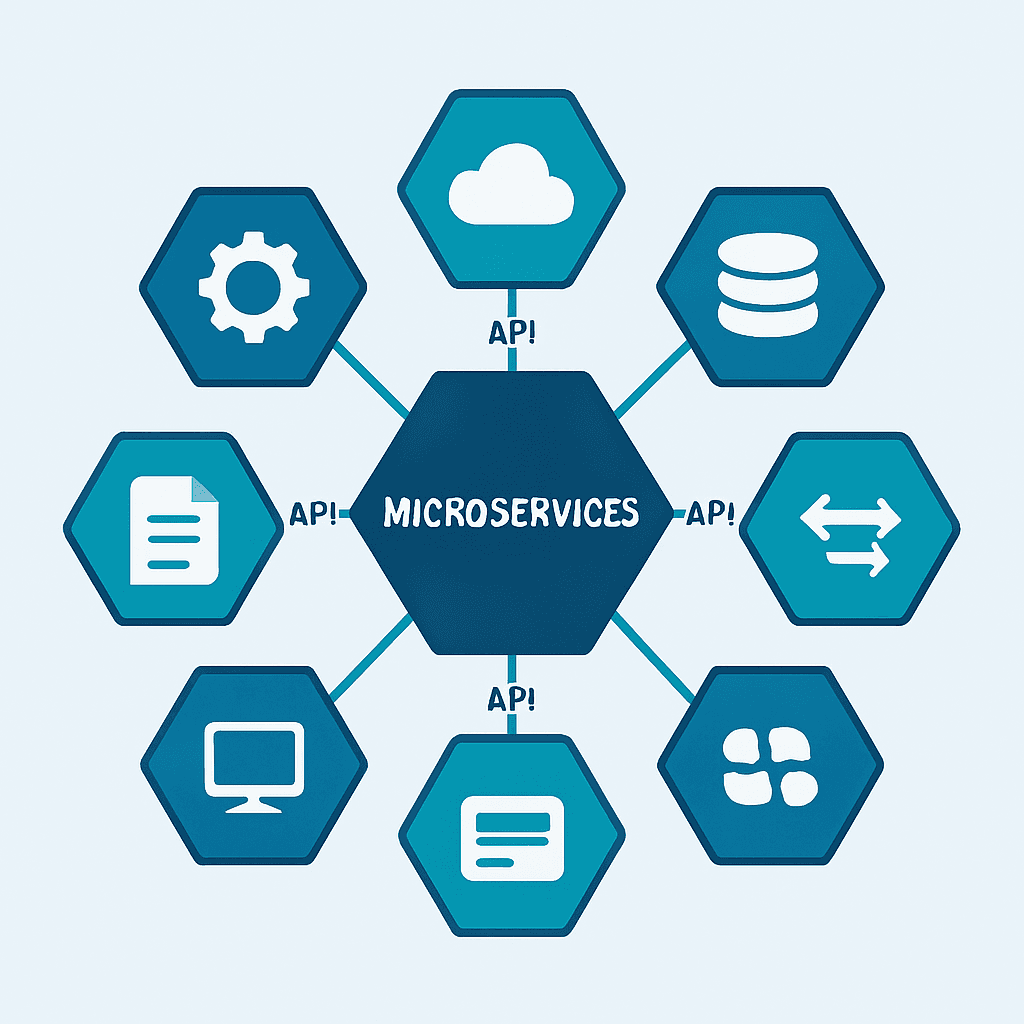
Microservices are an architectural style where an application is composed of small, independent services that:
- Run in their own processes
- Communicate via well-defined APIs
- Are independently deployable
- Are organized around business capabilities
- Can be written in different languages
- Use different data storage technologies
Monolith vs Microservices
Monolithic Architecture
Advantages:
- Simpler to develop initially
- Easier to test end-to-end
- Simpler deployment
- Better performance (no network calls)
- Easier to debug
Disadvantages:
- Tight coupling
- Difficult to scale specific components
- Long deployment cycles
- Technology stack lock-in
- Large codebase becomes unwieldy
Microservices Architecture
Advantages:
- Independent scaling
- Technology flexibility
- Faster deployment cycles
- Better fault isolation
- Team autonomy
- Easier to understand (smaller codebases)
Disadvantages:
- Increased complexity
- Network latency
- Data consistency challenges
- More difficult to test
- Operational overhead
- Requires DevOps maturity
When to Use Microservices
Good Candidates
Large, complex applications:
- Multiple business domains
- Different scaling requirements
- Large development teams
- Frequent deployments
Example: E-commerce platform with user management, product catalog, inventory, orders, payments, shipping, and recommendations.
Rapidly evolving products:
- Need for quick iterations
- A/B testing requirements
- Feature experimentation
Organizations with multiple teams:
- Teams can own services
- Independent release cycles
- Clear boundaries
When to Avoid Microservices
Small applications:
- Simple business logic
- Small team
- Limited resources
Startups finding product-market fit:
- Requirements change rapidly
- Need for speed over scalability
- Limited operational expertise
Insufficient DevOps maturity:
- No CI/CD pipeline
- Manual deployments
- Limited monitoring
Start with a monolith, extract microservices later when needed.
Designing Microservices
Domain-Driven Design
Use DDD to identify service boundaries:
Bounded Contexts:
E-commerce System:
├── User Management (Identity & Access)
├── Product Catalog (Products, Categories)
├── Inventory (Stock Management)
├── Orders (Order Processing)
├── Payments (Payment Processing)
├── Shipping (Fulfillment)
└── Recommendations (Personalization)
Each bounded context becomes a microservice.
Service Boundaries
Good service boundaries:
- High cohesion within service
- Low coupling between services
- Clear ownership
- Independent data storage
Bad service boundaries:
- Chatty communication
- Shared databases
- Circular dependencies
- Unclear ownership
API Design
RESTful APIs:
// User Service API
GET    /api/users
GET    /api/users/:id
POST   /api/users
PUT    /api/users/:id
DELETE /api/users/:id

// Order Service API
GET    /api/orders
GET    /api/orders/:id
POST   /api/orders
PUT    /api/orders/:id/status
GET    /api/orders/user/:userId
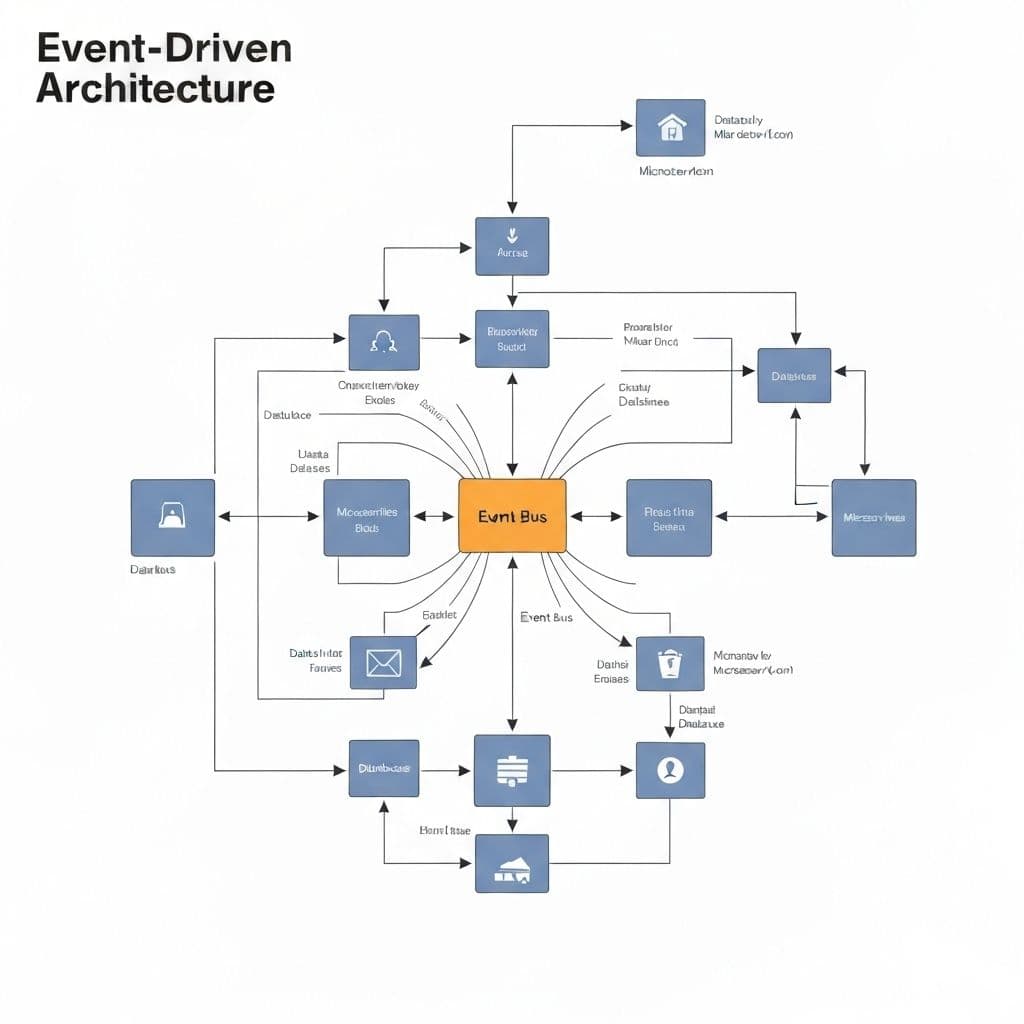
Event-Driven APIs:
// Publish events
eventBus.publish('order.created', {
  orderId: '123',
  userId: '456',
  items: [...],
  total: 99.99
})

// Subscribe to events
eventBus.subscribe('order.created', async (event) => {
  await inventoryService.reserveItems(event.items)
  await paymentService.processPayment(event)
  await shippingService.createShipment(event)
})
Communication Patterns
Synchronous Communication
HTTP/REST:
// API Gateway calling services
async function getOrderDetails(orderId) {
  const [order, user, products] = await Promise.all([
    fetch(`http://order-service/orders/${orderId}`),
    fetch(`http://user-service/users/${order.userId}`),
    fetch(`http://product-service/products?ids=${order.itemIds}`)
  ])

  return {
    order,
    user,
    products
  }
}
gRPC:
// user.proto
service UserService {
  rpc GetUser (GetUserRequest) returns (User);
  rpc CreateUser (CreateUserRequest) returns (User);
}

message User {
  string id = 1;
  string email = 2;
  string name = 3;
}
Asynchronous Communication
Message Queues (RabbitMQ, SQS):
// Producer
await queue.publish('order.created', {
  orderId: '123',
  userId: '456'
})

// Consumer
queue.subscribe('order.created', async (message) => {
  await processOrder(message)
  message.ack()
})
Event Streaming (Kafka):
// Producer
await kafka.send({
  topic: 'orders',
  messages: [{
    key: orderId,
    value: JSON.stringify(orderData)
  }]
})

// Consumer
await kafka.subscribe({
  topic: 'orders',
  fromBeginning: false
})

await kafka.run({
  eachMessage: async ({ topic, partition, message }) => {
    const order = JSON.parse(message.value)
    await handleOrder(order)
  }
})
Data Management
Database per Service
Each service owns its data:
User Service → Users DB (PostgreSQL)
Order Service → Orders DB (PostgreSQL)
Product Service → Products DB (MongoDB)
Inventory Service → Inventory DB (Redis)
Benefits:
- Service independence
- Technology flexibility
- Clear ownership
Challenges:
- No ACID transactions across services
- Data duplication
- Query complexity
Saga Pattern
Manage distributed transactions:
Choreography-based:
// Order Service
async function createOrder(orderData) {
  const order = await db.orders.create(orderData)
  await eventBus.publish('order.created', order)
  return order
}

// Inventory Service
eventBus.subscribe('order.created', async (order) => {
  try {
    await reserveInventory(order.items)
    await eventBus.publish('inventory.reserved', order)
  } catch (error) {
    await eventBus.publish('inventory.reservation.failed', order)
  }
})

// Payment Service
eventBus.subscribe('inventory.reserved', async (order) => {
  try {
    await processPayment(order)
    await eventBus.publish('payment.completed', order)
  } catch (error) {
    await eventBus.publish('payment.failed', order)
  }
})

// Order Service (compensation)
eventBus.subscribe('payment.failed', async (order) => {
  await db.orders.update(order.id, { status: 'cancelled' })
  await eventBus.publish('order.cancelled', order)
})
Orchestration-based:
// Order Orchestrator
async function processOrder(orderData) {
  const saga = new Saga()

  try {
    // Step 1: Create order
    const order = await saga.step(
      () => orderService.create(orderData),
      () => orderService.delete(order.id)
    )

    // Step 2: Reserve inventory
    await saga.step(
      () => inventoryService.reserve(order.items),
      () => inventoryService.release(order.items)
    )

    // Step 3: Process payment
    await saga.step(
      () => paymentService.charge(order),
      () => paymentService.refund(order)
    )

    // Step 4: Create shipment
    await saga.step(
      () => shippingService.create(order),
      () => shippingService.cancel(order)
    )

    await saga.commit()
    return order
  } catch (error) {
    await saga.rollback()
    throw error
  }
}
CQRS Pattern
Separate read and write models:
// Write Model (Command)
class CreateOrderCommand {
  async execute(orderData) {
    const order = await db.orders.create(orderData)
    await eventBus.publish('order.created', order)
    return order
  }
}

// Read Model (Query)
class OrderQueryService {
  async getOrderDetails(orderId) {
    // Optimized read model with denormalized data
    return await readDb.orderDetails.findOne({ orderId })
  }
}

// Event Handler (updates read model)
eventBus.subscribe('order.created', async (order) => {
  const user = await userService.getUser(order.userId)
  const products = await productService.getProducts(order.itemIds)

  await readDb.orderDetails.create({
    orderId: order.id,
    user: user,
    products: products,
    total: order.total
  })
})
Service Discovery
Client-Side Discovery
// Service Registry (Consul, Eureka)
class ServiceRegistry {
  async register(serviceName, host, port) {
    await consul.agent.service.register({
      name: serviceName,
      address: host,
      port: port,
      check: {
        http: `http://${host}:${port}/health`,
        interval: '10s'
      }
    })
  }

  async discover(serviceName) {
    const services = await consul.health.service(serviceName)
    return services.map(s => ({
      host: s.Service.Address,
      port: s.Service.Port
    }))
  }
}

// Client
async function callUserService() {
  const instances = await registry.discover('user-service')
  const instance = loadBalancer.choose(instances)
  return await fetch(`http://${instance.host}:${instance.port}/api/users`)
}
Server-Side Discovery
# Kubernetes Service
apiVersion: v1
kind: Service
metadata:
  name: user-service
spec:
  selector:
    app: user-service
  ports:
  - port: 80
    targetPort: 8080
// Client (uses DNS)
const response = await fetch('http://user-service/api/users')
API Gateway
Centralized entry point:
// API Gateway
const express = require('express')
const { createProxyMiddleware } = require('http-proxy-middleware')

const app = express()

// Authentication middleware
app.use(async (req, res, next) => {
  const token = req.headers.authorization
  const user = await authService.verify(token)
  req.user = user
  next()
})

// Rate limiting
app.use(rateLimit({
  windowMs: 15 * 60 * 1000,
  max: 100
}))

// Route to services
app.use('/api/users', createProxyMiddleware({
  target: 'http://user-service',
  changeOrigin: true
}))

app.use('/api/orders', createProxyMiddleware({
  target: 'http://order-service',
  changeOrigin: true
}))

app.use('/api/products', createProxyMiddleware({
  target: 'http://product-service',
  changeOrigin: true
}))

// Aggregation endpoint
app.get('/api/dashboard', async (req, res) => {
  const [orders, recommendations, profile] = await Promise.all([
    fetch('http://order-service/api/orders/recent'),
    fetch('http://recommendation-service/api/recommendations'),
    fetch(`http://user-service/api/users/${req.user.id}`)
  ])

  res.json({ orders, recommendations, profile })
})
Monitoring and Observability
Distributed Tracing
const { trace } = require('@opentelemetry/api')

// Service A
async function handleRequest(req, res) {
  const tracer = trace.getTracer('service-a')
  const span = tracer.startSpan('handleRequest')

  try {
    // Call Service B with trace context
    const response = await fetch('http://service-b/api/data', {
      headers: {
        'traceparent': span.spanContext().traceId
      }
    })

    span.setStatus({ code: SpanStatusCode.OK })
    res.json(response)
  } catch (error) {
    span.setStatus({ code: SpanStatusCode.ERROR })
    throw error
  } finally {
    span.end()
  }
}
Health Checks
app.get('/health', async (req, res) => {
  const health = {
    status: 'healthy',
    checks: {
      database: await checkDatabase(),
      redis: await checkRedis(),
      dependencies: await checkDependencies()
    }
  }

  const isHealthy = Object.values(health.checks)
    .every(check => check.status === 'healthy')

  res.status(isHealthy ? 200 : 503).json(health)
})
Testing Strategies
Unit Tests
Test individual components:
describe('OrderService', () => {
  test('creates order successfully', async () => {
    const orderData = { userId: '123', items: [...] }
    const order = await orderService.create(orderData)

    expect(order.id).toBeDefined()
    expect(order.status).toBe('pending')
  })
})
Integration Tests
Test service interactions:
describe('Order Creation Flow', () => {
  test('creates order and reserves inventory', async () => {
    const order = await orderService.create(orderData)

    // Wait for async processing
    await waitFor(() =>
      inventoryService.isReserved(order.items)
    )

    expect(order.status).toBe('confirmed')
  })
})
Contract Tests
Verify API contracts:
// Consumer test (Order Service)
describe('User Service Contract', () => {
  test('returns user data', async () => {
    const user = await userService.getUser('123')

    expect(user).toMatchSchema({
      id: expect.any(String),
      email: expect.any(String),
      name: expect.any(String)
    })
  })
})
Deployment Strategies
Independent Deployment
Each service deploys independently:
# CI/CD Pipeline
name: Deploy User Service
on:
  push:
    paths:
      - 'services/user/**'
jobs:
  deploy:
    runs-on: ubuntu-latest
    steps:
      - uses: actions/checkout@v2
      - name: Build
        run: docker build -t user-service .
      - name: Test
        run: npm test
      - name: Deploy
        run: kubectl apply -f k8s/user-service.yaml
Canary Deployment
Gradual rollout:
# Istio VirtualService
apiVersion: networking.istio.io/v1alpha3
kind: VirtualService
metadata:
  name: user-service
spec:
  hosts:
  - user-service
  http:
  - match:
    - headers:
        canary:
          exact: "true"
    route:
    - destination:
        host: user-service
        subset: v2
  - route:
    - destination:
        host: user-service
        subset: v1
      weight: 90
    - destination:
        host: user-service
        subset: v2
      weight: 10
Common Pitfalls
Over-Engineering
Don't create microservices for everything. Start simple.
Distributed Monolith
Avoid tight coupling between services. Services should be truly independent.
Ignoring Network Failures
Always handle network failures gracefully with retries, timeouts, and circuit breakers.
Insufficient Monitoring
Without proper observability, debugging distributed systems is nearly impossible.
Premature Optimization
Don't optimize for scale you don't have yet.
Migration Strategy
Strangler Fig Pattern
Gradually replace monolith:
- Identify bounded context
- Build new microservice
- Route traffic to new service
- Remove code from monolith
- Repeat
// API Gateway routes traffic
app.use('/api/users', (req, res, next) => {
  if (featureFlags.newUserService) {
    // Route to microservice
    proxy('http://user-service')(req, res, next)
  } else {
    // Route to monolith
    proxy('http://monolith/users')(req, res, next)
  }
})
Conclusion
Microservices are powerful but complex. Success requires:
- Clear service boundaries: Use DDD
- Independent deployment: CI/CD automation
- Resilient communication: Handle failures
- Data management strategy: Saga, CQRS
- Comprehensive monitoring: Distributed tracing
- DevOps maturity: Automation, monitoring
- Team organization: Service ownership
Start with a monolith, extract microservices when you have clear reasons and the organizational maturity to support them. Microservices are a means to an end, not an end in themselves.