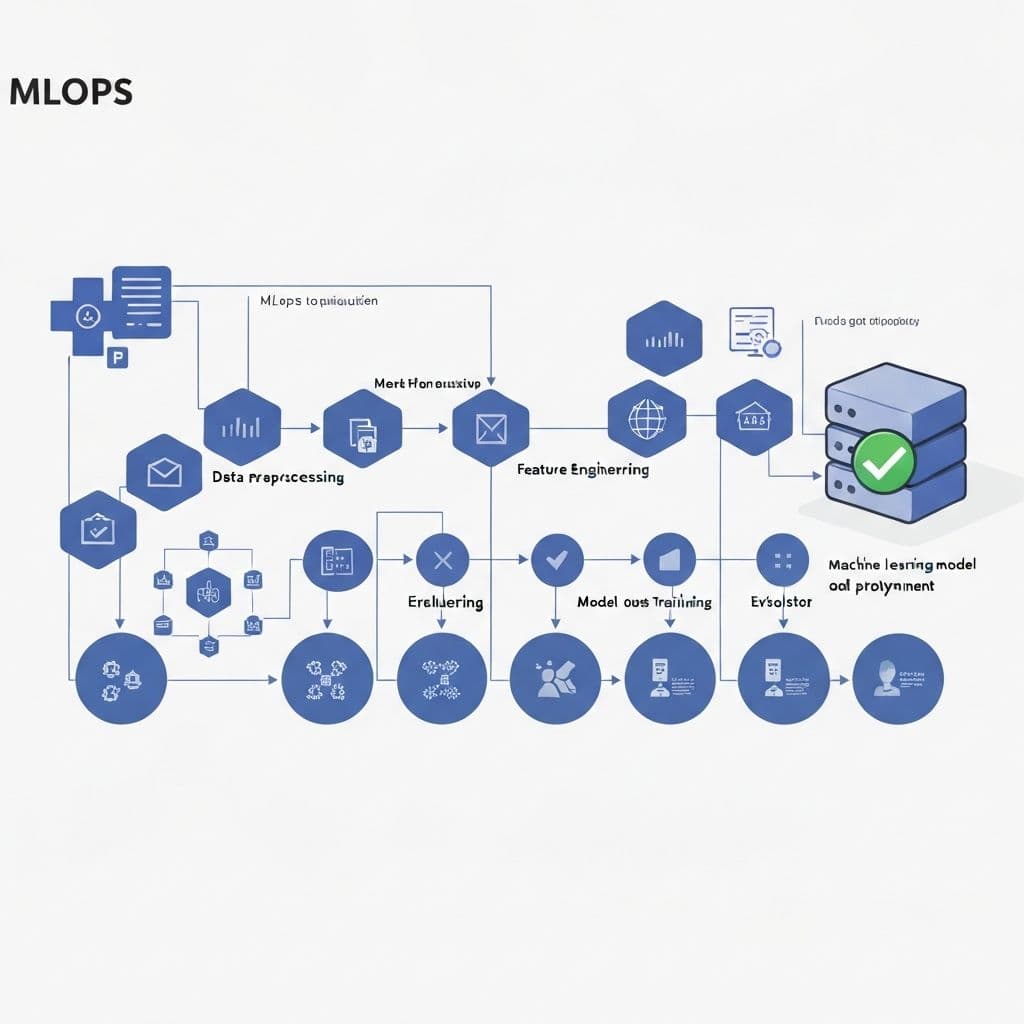
MLOps Best Practices: Operationalizing Machine Learning
Machine Learning Operations (MLOps) bridges the gap between ML development and IT operations. It aims to standardize and streamline the lifecycle of machine learning models.
What is MLOps?
MLOps is a set of practices that combines ML, DevOps, and Data Engineering to automate and manage the end-to-end ML lifecycle.
Key Goals:
- Faster time-to-market for ML models
- Improved model quality and reliability
- Scalable and reproducible ML workflows
- Continuous integration, delivery, and monitoring of ML models
Core Principles
1. Automation
Automate repetitive tasks in the ML pipeline: data preparation, model training, testing, and deployment.
2. Continuous Integration and Delivery (CI/CD)
Apply CI/CD principles to ML workflows, enabling frequent and reliable model updates.
3. Monitoring and Observability
Track model performance in production, detect drift, and enable quick debugging.
4. Reproducibility
Ensure experiments and models can be reproduced reliably across environments.
Best Practices
- Version Everything: Data, code, parameters, models, environments.
- Automate Pipelines: From data ingestion to model deployment.
- Monitor Production Models: Continuously track performance and drift.
- Implement CI/CD for ML: Treat ML model deployment like application deployment.
- Standardize Environments: Use containers (Docker) and orchestration (Kubernetes).
Conclusion
MLOps is crucial for successfully operationalizing machine learning models. By adopting MLOps principles, organizations can accelerate ML development and ensure models deliver continuous business value in production.